Oil and gas companies operate some of the most complex, capital-intensive, and risk-exposed assets on earth—subsea wells, cross-country pipelines, high-pressure separators, and refineries that run around the clock. In this environment, the difference between routine operations and a major incident often comes down to how quickly anomalies are detected and acted upon. That’s why the industry has embraced optical technologies—especially fiber sensors—to gain continuous visibility into temperature, vibration, acoustics, and strain across long distances and harsh conditions. By turning a strand of glass into a continuous sensing line, operators can see more, sooner, and with greater accuracy than ever before.
This article explains how distributed optical sensing works, where it’s deployed in the oil and gas value chain, and why the role of an optical fiber technician is pivotal to making the promise of these systems real. Along the way, we’ll show how a modern program blends instrumentation, data science, and rigorous field practice to deliver safer, more reliable, and more efficient operations.
How distributed optical sensing works
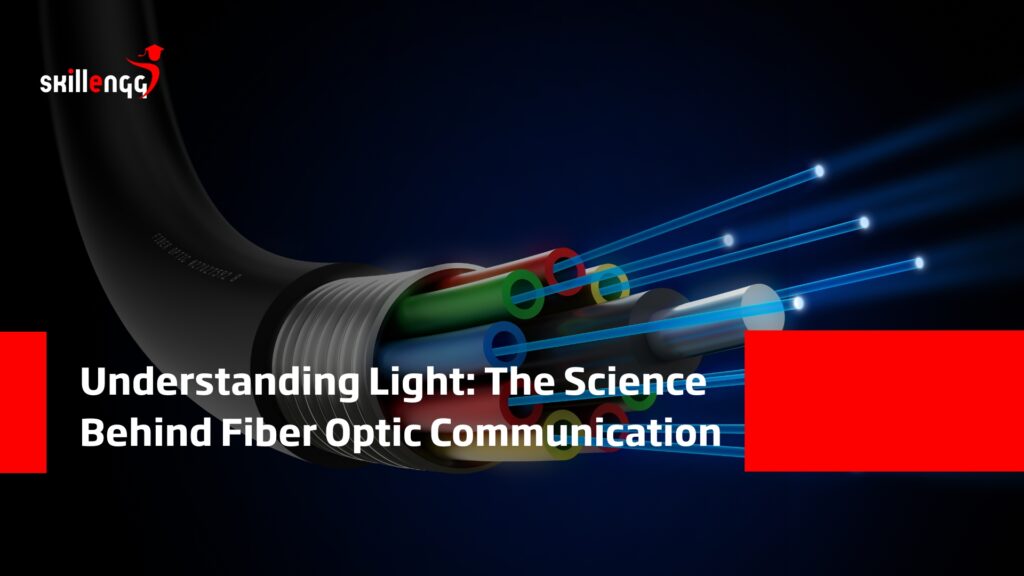
At the heart of today’s monitoring solutions is the idea that a single optical fiber can act like thousands of virtual sensors along its entire length. An interrogator unit sends laser pulses into the fiber. Tiny backscatter effects—Rayleigh, Raman, and Brillouin—return to the interrogator with signatures that correlate to temperature, vibration/acoustics, and strain. With clever signal processing, these returns are mapped to precise locations along the cable, often with meter-level resolution over tens of kilometers. That means fiber sensors can detect a temperature spike at kilometer 63.4 of a hot line, or a characteristic vibration pattern that sounds like a leak or third-party digging near a buried pipe.
Different techniques address different needs:
- Distributed Temperature Sensing (DTS): Uses Raman scattering to provide a continuous temperature profile. Great for flow assurance, hot-spot detection, and thermal breakthrough analysis in wells.
- Distributed Acoustic Sensing (DAS): Leverages coherent Rayleigh backscatter to “listen” for vibrations and acoustic events. Ideal for leak detection, hydraulic fracture monitoring, intrusion detection, and pig tracking.
- Distributed Strain/Pressure Sensing (DSS/DPS): Uses Brillouin scatter to measure dynamic and static strain—critical for geohazard monitoring, ground movement, and structural health.
While point sensors still have their place, the ability to cover long spans with a single cable gives fiber sensors a strategic edge for linear assets like pipelines, flowlines, and power umbilicals.
Where fiber shines across the value chain
Upstream (wells and production)
In production wells, DTS reveals fluid movement and steam or water breakthrough by tracking the thermal fingerprint along the completion. DAS can confirm inflow contributions, detect sand production, or listen for valve operations. In hydraulic fracturing, DAS measures micro-seismic and perforation signals to help engineers balance stages and maximize recovery. These insights move operators from static models to dynamic, data-driven decision-making.
Midstream (pipelines and terminals)
For pipelines, the combination of DAS and DSS forms a real-time early-warning system. DAS detects the acoustic signature of a growing leak or the mechanical noise of an excavator bucket before it strikes a line. DSS monitors strain to flag geohazards, landslides, or ground heave. Together, they shorten the interval between incident and response—reducing product loss, environmental impact, and downtime.
Downstream (refineries and storage)
Refinery operators use DTS to watch for hot spots along coker lines or heat-traced systems, while DAS provides intrusion detection around tank farms and perimeter fences. By feeding events into the control system, fiber sensors become part of automated protection layers, triggering alarms, valve closures, or patrols as needed.
Why installation quality determines data quality
Even the best instrumentation can only deliver value if the basics are right: correct cable selection, proper routing, clean splices, and thorough testing. That is where the optical fiber technician becomes indispensable. Their responsibilities begin long before a reel is pulled onto a right-of-way and continue for the life of the asset.
Design and specification. Technicians advise on cable types (steel-tube, gel-filled, tight-buffered), armoring for crush resistance, water-blocking for subsea applications, and UV/chemical protection for topsides. They collaborate with pipeline, well, and facilities engineers to choose installation methods—direct burial, conduit, strapped to a pipe, or integrated into a control umbilical. Getting these decisions right ensures optical fiber optic routes will meet bend-radius limits, avoid thermal extremes, and remain serviceable.
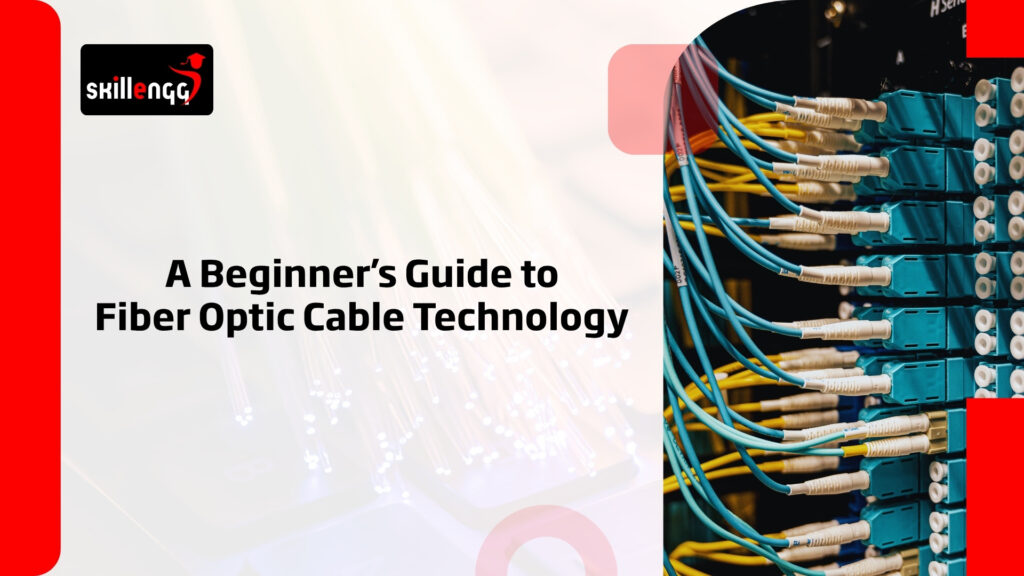
Installation and splicing. Field conditions are rarely friendly—deserts, jungles, offshore decks, or frozen tundra. Technicians set up dust-controlled splice environments, perform fusion splices that minimize insertion loss, polish and inspect connectors, and label every termination. Microscopic contamination can ruin a measurement; disciplined cleaning and inspection habits—“inspect before you connect”—are non-negotiable.
Commissioning and baselining. Before handover, the team runs OTDR traces, insertion/return-loss tests, and end-to-end verifications from the interrogator. These baseline records become the reference for future troubleshooting, so an optical fiber technician makes sure they are complete and well documented.
Operations and troubleshooting. Over time, events happen—earth movement induces macro-bends, anchors scrape a cable, or a tray floods. With their understanding of OTDR signatures and interrogator diagnostics, technicians can localize and correct faults quickly. Their work reduces mean time to repair (MTTR) and keeps the sensing system trustworthy for operations and regulatory reporting.
When the field craft is excellent, analytics teams and control rooms can rely on the streams coming from each fiber optic sensor array. When it’s sloppy, false positives proliferate, alarms get ignored, and the business case erodes. In other words: data quality is a maintenance outcome.
Building a safety case with optical sensing
Regulators and insurers increasingly look for robust leak detection and intrusion-monitoring capabilities. Because fiber sensors provide continuous coverage instead of intermittent check points, they strengthen the safety case in several ways:
- Faster detection and precise localization. DAS can spot the acoustic fingerprint of a pinhole leak and triangulate its position to a few meters, even where conventional SCADA signals are ambiguous.
- Fewer blind spots. A single cable can protect many kilometers of pipe or the entire perimeter of a tank farm, illuminating areas where legacy instruments would be impractical.
- Objective records. Time-stamped traces from interrogators create audit trails for incident investigations and compliance documentation.
- Integration with protection layers. Events can trigger logic in the safety instrumented system—slowdown, isolation, or shutdown—without waiting for human confirmation.
These attributes support environmental stewardship and community trust while reducing the total cost of risk.
Performance and reliability gains
Sensing is not just about alarms. Operators also use fiber optic sensor data to optimize performance:
- Flow assurance. DTS reveals wax or hydrate formation areas so heat tracing or chemical injection can be targeted.
- Asset life. DSS tracks strain cycles, informing when to inspect or replace sections before fatigue creates failures.
- Work planning. DAS and perimeter detection reduce unnecessary patrols while ensuring high-value interventions happen sooner.
- Energy efficiency. Early detection of insulation failures or fouling helps sustain heat integration and reduce fuel consumption.
Because these improvements are continuous, they compound over time—small efficiency gains, fewer unplanned outages, and faster restarts add up to big money across a fleet of assets.
Data, analytics, and the human loop
Modern interrogators stream high-resolution data that can overwhelm naïve analysis. Turning signals into insight requires edge analytics to filter and classify events (vehicle, footstep, rain, leak), and cloud pipelines to correlate with operations data (pressure, flow, temperature). Machine learning models improve classification accuracy as labeled examples accumulate.
Still, algorithms don’t operate in a vacuum. Field validation by operations crews closes the loop: they verify events in the real world and feed back the outcomes. Here again, the optical fiber technician is central. They help determine whether a weird signature is a real phenomenon or a cabling artifact, and they maintain the optical plant so that analytics learn from clean data rather than noise.
Program design: making it work in the real world
A successful rollout follows a disciplined roadmap:
- Risk-based scoping. Map high-consequence areas, environmental sensitivities, and third-party activity to prioritize routes for optical fiber optic coverage.
- Technology fit. Select DTS/DAS/DSS combinations that match the risk profile—e.g., DAS for right-of-way security, DSS for landslide corridors, DTS for hot-line surveillance.
- Installation strategy. Choose burial depth, conduit, and protection methods; plan overlapping loops for redundancy; and define maintenance access points.
- Operations integration. Connect interrogators to the control system with clear alarm logic, response playbooks, and escalation paths. Train controllers to recognize event classes.
- Sustainment. Budget for periodic re-baselining, spare parts, and ongoing training. Make the fiber sensors system part of routine preventive maintenance, not a special project that fades after commissioning.
This approach turns one-off pilots into enduring capabilities that deliver year after year.
Skills and training: why people are the advantage
All the above depends on people who can bridge design intent and field reality. That starts with multidisciplinary teams and hinges on craft expertise. The industry needs professionals who understand both photonics and pipelines—how a splice tray affects optical budget, how soil compaction affects strain readings, and how to work safely around pressurized systems. That is why structured training and certification paths for the optical fiber technician role are so valuable. Programs that teach splicing, inspection, OTDR diagnostics, interrogator configuration, and documentation standards create practitioners capable of supporting operations over decades.
Equally important is cross-training operations engineers and data analysts so they understand what the signals mean and how to act on them. A healthy sensing program is not a gadget; it is a living collaboration between instrumentation, integrity, and operations.
The road ahead
The future is bright—pun intended. Interrogators are getting more sensitive and power-efficient, enabling longer reaches and higher resolution. Edge AI is improving event classification and reducing nuisance alarms. New cable designs withstand harsher chemistries and temperatures. And integration with satellite data, drones, and robotics will create richer digital twins of assets and right-of-ways.
As these capabilities mature, companies that invest in robust optical infrastructure—and the people to build and maintain it—will see outsized benefits in safety, uptime, and environmental stewardship. To meet this talent need, Skillengg’s Optical Fiber Technician course (industry-aligned, hands-on training) develops job-ready technicians in splicing, OTDR diagnostics, interrogator setup, and field commissioning. For teams scaling fiber sensing and communications, partnering with graduates of Skillengg’s best-in-class fiber technician program ensures the technology’s promise becomes reliable, long-term performance in the field.
Conclusion
Oil and gas operators need reliable, continuous, and actionable awareness across vast, often hostile environments. Distributed optical sensing delivers exactly that by transforming a simple strand into a line of intelligence. With DTS, DAS, and DSS, fiber sensors provide early leak detection, structural insight, intrusion awareness, and performance optimization—at scale. Yet technology alone is not enough. The craftsmanship and discipline of the optical fiber technician determine whether the data is trusted and the system endures. When organizations combine the right architecture, rigorous installation, and strong analytics with capable people, they unlock the full promise of fiber sensors—safer operations, better reliability, and stronger environmental outcomes for the long haul.