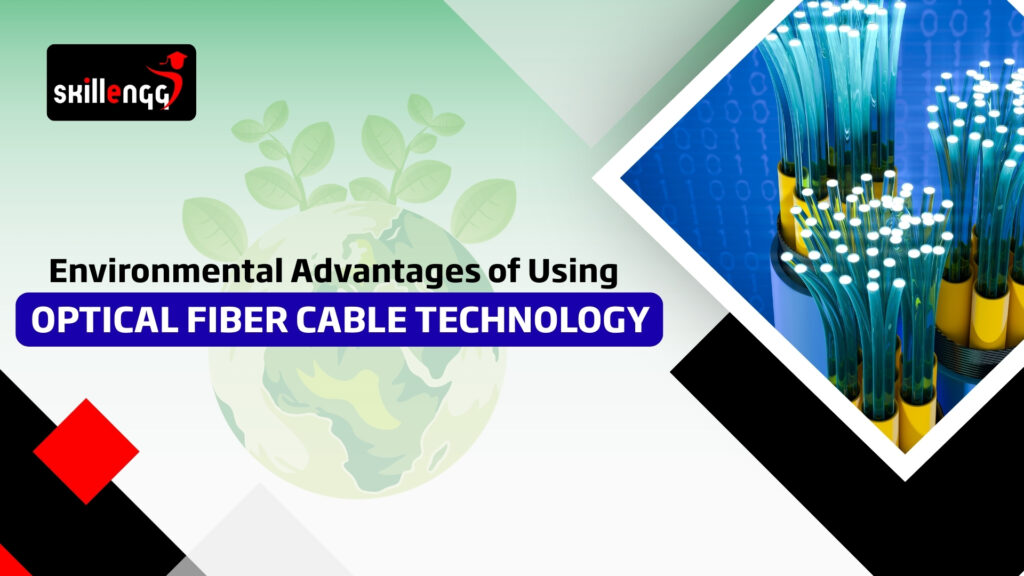
In the modern digital era, the demand for faster, cleaner, and more energy-efficient communication technologies continues to grow. Among the many innovations reshaping global connectivity, optical fiber cable technology stands out as a groundbreaking solution with remarkable environmental advantages. Unlike traditional copper-based systems, optical fiber cable networks consume less energy, generate lower carbon emissions, and offer greater sustainability in the long term. As governments and industries across the world set ambitious environmental goals, the adoption of fiber-based infrastructure is becoming a critical step in creating eco-friendly communication ecosystems.
This blog explores the key environmental benefits of optical fiber cable technology, highlighting why it plays a major role in building a sustainable digital future and how an Optical Fiber Technician Course helps professionals support this eco-friendly transformation.
Reducing Environmental Impact with Fiber Optics
Reducing environmental impact with fiber optics showcases how optical fiber technology enables sustainable communication by cutting energy use and carbon emissions. Skilled professionals are key to deploying and maintaining these networks efficiently. An Optical Fiber Technician Course trains learners in installation, testing, splicing, and troubleshooting, preparing them for high-demand careers in green communication infrastructure. With competent fiber optic technicians, industries can maximize both technological performance and environmental benefits.
1. Reduced Energy Consumption
One of the most important environmental advantages of optical fiber cable technology is its significantly lower energy consumption. Optical fibers transmit data using light signals, which travel long distances with minimal signal loss. This requires far less electrical power compared to copper cables.
Copper networks often use energy-intensive electrical repeaters placed at frequent intervals to boost weak signals. Fiber networks, however, require fewer amplifiers and operate efficiently even over hundreds of kilometers.
This reduction in energy use directly lowers greenhouse gas emissions and helps industries reduce their carbon footprint. As global data usage continues to rise, adopting energy-efficient technologies like fiber becomes not just a choice but a necessity.
The growing advancements in fiber optic communication further enhance energy savings, enabling digital services, broadband networks, and cloud applications to operate cleanly and efficiently. With fiber optic communication continuing to expand, more industries are shifting toward greener data transmission systems.
2. Lower Carbon Emissions and Environmental Pollution
Copper mining and processing contribute significantly to environmental pollution, releasing harmful chemicals and generating large quantities of waste. In contrast, the raw materials used for manufacturing optical fiber cable are largely abundant and environmentally friendly, including silica (sand), one of the Earth’s most plentiful natural resources.
Additionally, fiber cables weigh significantly less and require fewer materials during installation. This reduces fuel consumption associated with transportation and deployment. The lightweight nature of fiber optic cable helps minimize emissions throughout the network deployment lifecycle. Since fiber optic cable also lasts much longer than copper alternatives, the environmental burden from replacements is significantly reduced.
The incorporation of advanced sensing technologies, such as the fiber optic sensor, further supports environmental monitoring and protection. Fiber optic sensors are widely used in pollution detection, water quality assessment, and structural health monitoring, making the technology not only eco-friendly but also a tool for safeguarding the environment.
3. Enhanced Durability and Reduced Waste Generation
Environmental sustainability also hinges on the longevity of materials. Optical fibers are incredibly durable and resistant to harsh climatic conditions, electromagnetic interference, and corrosion. Copper cables, on the other hand, deteriorate faster, especially in humid or chemically active environments. Their shorter lifespan leads to frequent replacements, creating more electronic waste (e-waste).
Optical fiber cable networks can last 25 to 40 years with proper maintenance. Their long lifespan means:
- Fewer replacements
- Lower maintenance costs
- Reduced raw material usage
- Lower landfill waste
This durability not only benefits the environment but also reduces operational expenses for companies, making fiber technology a long-term sustainable investment.
4. Minimal Heat Generation and Improved Safety
Another environmental advantage often overlooked is the low heat generation of optical fiber cable. Copper cables generate heat during data transmission, contributing to energy loss and requiring additional cooling systems in large network facilities. Data centers with copper-based networks frequently consume enormous energy for air-conditioning.
Because optical fibers transmit light instead of electricity, they produce virtually no heat, significantly lowering the energy required for cooling. This contributes to major carbon savings, especially in large-scale data centers and telecom industries.
Furthermore, fiber cables are non-flammable and do not produce toxic smoke in the event of damage, making them a safer and more environmentally friendly option in both residential and industrial applications.
5. Support for Smart and Sustainable Technologies
Modern sustainability efforts demand real-time data monitoring, automation, and precise environmental sensing. Optical fiber technology supports the development of these systems. With the rise of smart cities, smart agriculture, and intelligent transportation, fiber serves as the backbone for efficient data exchange.
Technologies like fiber optic communication play a key role in enabling low-emission digital infrastructure across cities. Meanwhile, fiber optic sensors are widely applied in environmental conservation, climate monitoring, and renewable energy systems such as solar and wind farms.
As industries move toward digitization and automation, fiber networks provide the capability for sustainable operation with minimal ecological impact.
6. Reduced Electromagnetic Pollution
Copper cables emit electromagnetic interference (EMI), which affects sensitive equipment and contributes to environmental noise pollution. Optical fiber cable networks completely eliminate EMI because they transmit data using light rather than electrical signals.
This makes optical fiber ideal for use in:
- Hospitals
- Airports
- Power plants
- Marine environments
- Research laboratories
With zero electromagnetic leakage, optical fiber becomes the most eco-friendly and health-safe communication option.
7. Supporting the Circular Economy and Green Infrastructure
The adoption of optical fiber cable technology contributes to the circular economy by reducing the need for mining, lowering material wastage, and ensuring long product lifecycles. Fiber materials can also be recycled or repurposed, further enhancing environmental sustainability.
Additionally, the installation of fiber broadband encourages digital transformation by enabling remote work, virtual meetings, online education, and digital transactions—all of which reduce the need for travel and help cut global emissions.
As technologies evolve, the relevance of fiber optic sensor systems and fiber optic communication networks continues to rise, strengthening green infrastructure across industries.
Optical Fiber Technician Training by Skillengg
The Optical Fiber Technician Course at Skillengg is designed to equip learners with practical, industry-focused skills in fiber installation, splicing, testing, troubleshooting, and network maintenance. Through hands-on training, updated tools, and real-world labs, students gain the technical expertise required for careers in telecom, broadband, and networking. The course prepares learners for high-demand job roles in fiber optic communication and fiber network deployment.
Conclusion
The environmental advantages of optical fiber cable technology are extensive and impactful. From reducing carbon emissions and energy consumption to supporting smart, eco-friendly digital systems, fiber plays a major role in building a sustainable future. Its durability, low pollution potential, and compatibility with modern green technologies make it one of the most environmentally responsible choices for global communication networks.
As industries continue adopting fiber optic communication, fiber optic sensors, fiber optic cable, and training professionals through an Optical Fiber Technician Course, the shift toward cleaner and more efficient communication systems becomes unstoppable.